

Spring Guide
What Causes Garage Door Springs to Break?
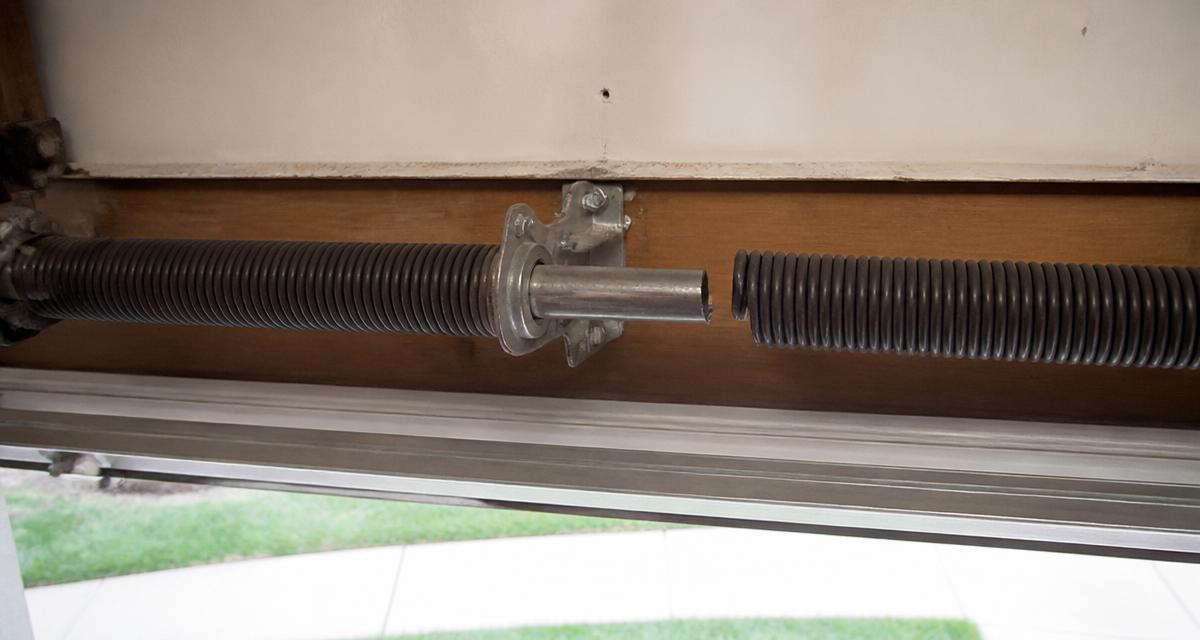
Garage door springs are consumable parts, not permanent hardware. They're wound steel bars holding hundreds of pounds of stored energy, flexed thousands of times a year. Every spring eventually breaks — the question is whether yours lasts 4 years or 20. Here's what actually determines that.
TL;DR
Cycle fatigue is the primary cause — standard springs are rated for about 10,000 open/close cycles, roughly 7 years of normal use. Rust, no lubrication, undersized or mismatched springs, an unbalanced door, and cold snaps all shorten that. Lubricating the coils twice a year and upgrading to high-cycle springs are the two best ways to extend life.
1. Cycle fatigue (the main reason)
One cycle = one open plus one close. Each cycle flexes the steel, and metal fatigue accumulates in a predictable way. Standard springs carry a 10,000-cycle rating. Households that use the garage as the main door easily hit 6+ cycles a day.
| Spring rating | Daily use | Expected life |
|---|---|---|
| 10,000 cycles (standard) | 2 cycles/day | ~13 years |
| 10,000 cycles (standard) | 4 cycles/day | ~7 years |
| 10,000 cycles (standard) | 6 cycles/day | ~4.5 years |
| 20,000 cycles (high-cycle) | 4 cycles/day | ~13 years |
| 50,000 cycles (high-cycle) | 6 cycles/day | ~22 years |
2. Rust and humidity
Carolina humidity is hard on bare steel. Rust does two things: it raises friction between coils so each cycle does more damage, and it pits the surface, creating micro-cracks where failure starts. An unlubricated spring in a damp garage can lose several years of service life. Coating the coils with a silicone or lithium garage door lubricant twice a year genuinely works.
3. No maintenance
Springs are part of a system. Dry rollers, seized hinges, and a misaligned track all force the spring to work against extra resistance on every cycle. An annual tune-up that lubricates, torques hardware, and rebalances the door pays for itself in spring life alone.
4. Wrong spring size or weight mismatch
Springs must be matched to the door's exact weight, height, and drum size — wire diameter, inside diameter, and length all matter. Undersized springs are a classic budget-installer shortcut and they fail years early while burning out the opener alongside them. This is also why adding insulation panels or a heavier decorative overlay to an existing door without re-springing it causes premature failure.
5. Cold weather
Cold doesn't wear springs out; it exposes ones that are already worn. Steel becomes more brittle and contracts slightly at low temperatures, raising internal stress. That's why the first hard freeze of a Charlotte winter produces a wave of broken-spring calls in a single morning.
6. An unbalanced door
Test balance twice a year: with the opener disconnected via the red release cord, lift the door to waist height and let go. A balanced door stays put. If it slams down or flies up, the spring tension is wrong — and wrong tension means every cycle overstresses the spring, the cables, and the opener.
7. Low-quality or mismatched replacements
Cheap import springs with inconsistent steel and no galvanized or oil-tempered coating fail well before their claimed rating. And replacing only one spring in a two-spring system leaves a new spring paired with a worn one — the old one fails soon after and the imbalance strains the new one in the meantime. Always replace in pairs.
Warning signs before a spring breaks
- The door feels noticeably heavier by hand than it used to.
- It opens jerkily, or hesitates and sags partway up.
- Visible gaps, rust streaks, or stretched-looking sections in the coil.
- The door slams the last foot instead of settling gently.
- Loud creaks or pops from the shaft above the door during operation — see noisy door diagnosis.
- The opener strains, stops early, or reverses without an obstruction.
How to make your springs last longer
- Lubricate the coils twice a year with silicone or lithium garage door lube — never WD-40.
- Upgrade to high-cycle springs at replacement time. A 20,000–50,000-cycle set costs modestly more and often doubles or triples service life.
- Keep the rest of the system running free — nylon rollers, greased hinges, aligned track.
- Check balance twice a year with the waist-height test above.
- Re-spring after any door modification that changes weight.
If a spring already broke
Leave the door closed and don't use the opener. A broken torsion spring shows a visible two-inch gap in the coil above the door. Torsion springs are wound under enormous tension and are one of the most dangerous DIY jobs in a home — see DIY vs. professional spring repair. Replacement is same-day work for a technician, usually 60–90 minutes.
Frequently asked questions
What causes garage door springs to break?
The number one cause is simple cycle fatigue. A standard torsion spring is rated for about 10,000 cycles — roughly 7 years at 3–4 uses a day. Every open and close flexes the steel, and eventually it fails. Rust, lack of lubrication, undersized springs, sudden temperature drops, and unbalanced doors all accelerate that timeline.
How long should garage door springs last?
Standard springs are rated for 10,000 cycles, which is about 7 years of typical use. High-cycle springs rated for 20,000–50,000 cycles can last 15–20 years and cost only modestly more — a smart upgrade for a busy household that uses the garage as its main entrance.
Why do garage door springs break in cold weather?
Cold makes steel more brittle and less able to absorb stress, and the metal contracts slightly, increasing internal tension. A spring already near the end of its cycle life often fails on the first hard freeze of the year. That's why Charlotte-area spring calls spike during January cold snaps — the cold didn't wear the spring out, it just picked the moment.
Can rust break a garage door spring?
Yes. Rust increases friction between coils and creates surface pits that act as stress concentrators — cracks start at those pits. In humid Carolina garages, an unlubricated spring can lose years of service life. Spraying the coils with a garage door lubricant twice a year is the single most effective thing a homeowner can do to extend spring life.
Do both garage door springs need to be replaced if one breaks?
On a two-spring torsion system, yes — replace both. The second spring has the same age and cycle count, so it is typically weeks or months from failing too. Replacing only one also leaves the door unbalanced, which puts extra strain on the new spring, the cables, and the opener. Both springs in one visit costs far less than two separate service calls.
Is it dangerous to use a garage door with a broken spring?
Yes. With the counterbalance gone, the door's full 150–350 lbs is unsupported. Forcing it open by hand or with the opener can snap cables, bend track, strip the opener gear, or drop the door. Leave the door closed and call a technician.
How much does garage door spring replacement cost?
In the Charlotte area, torsion spring replacement typically runs $200–$400 for a single spring and $300–$550 for a matched pair, including labor. High-cycle springs add modestly to the price and often double or triple the service life. See our spring replacement cost guide for detail.
Related reading
- Garage door spring replacement cost
- DIY vs. professional spring repair
- Garage door lifespan: repair or replace?
- Spring repair service
Broken spring? Don't force the door.
We stock standard and high-cycle springs on every truck and replace in matched pairs — flat-rate written pricing before any work starts, same-day across Charlotte and the Carolinas.
Ready to fix it?
Springs fail on a cycle count, not a calendar. We replace them in pairs with high-cycle stock.
- Broken spring repairHigh-cycle torsion springs installed in pairs, same day.
- Garage door maintenanceLubrication, balance and hardware tightening twice a year.