

Safety Guide
DIY vs Professional Garage Door Spring Repair: Is It Worth the Risk?
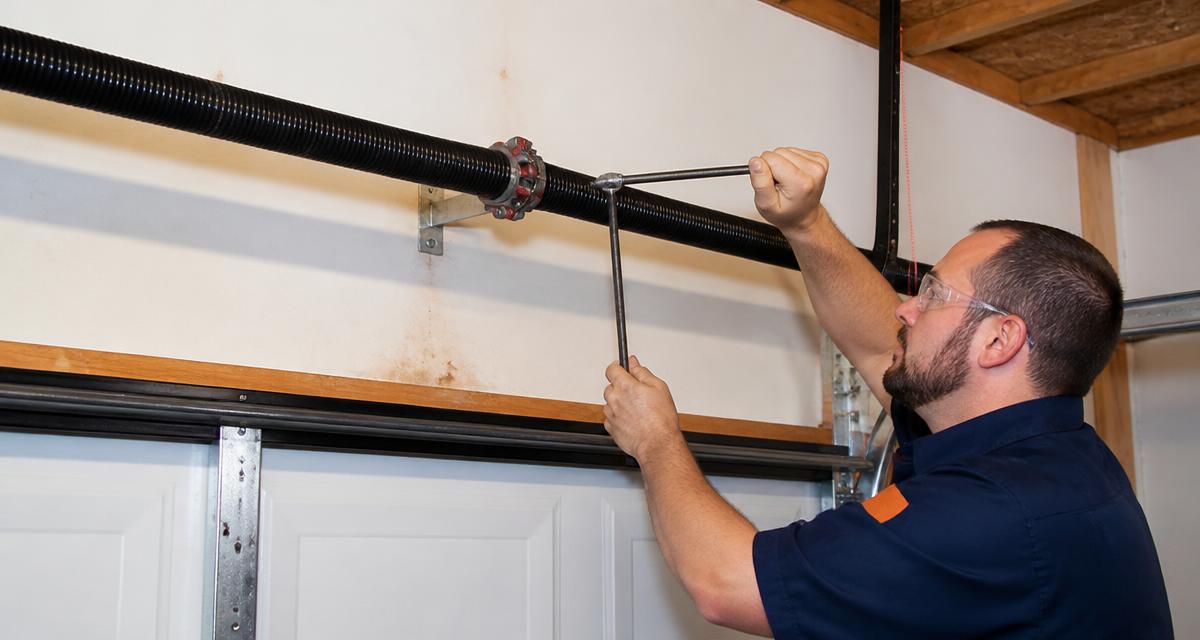
A broken garage door spring is one of the most common home repairs in Charlotte. It is also one of the most dangerous. If you are searching "can I fix a garage door spring myself," the short answer is: you probably can, but you should not. Here is a realistic comparison of DIY cost, tools, safety risks, and the value of hiring a professional — plus what you should do instead.
TL;DR — should you DIY it?
DIY is not worth the risk for most homeowners. The parts are only $80–$140, but the job requires specialized tools, a clear understanding of spring tension math, and a tolerance for real injury risk. A professional single-spring replacement in Charlotte costs $270–$480 installed, and that price includes proper sizing, safe tensioning, and a warranty. For most families, paying the labor difference is the smarter and safer choice.
What makes garage door springs so dangerous?
Torsion springs are tightly wound metal coils mounted above your door. They store the energy needed to lift a 150–350 lb door smoothly. When a spring breaks, that energy releases all at once — which is why a broken spring often sounds like a gunshot from inside the garage.
During installation or removal, the spring must be wound or unwound under tension. If the winding bar slips, the wrong tool is used, or the cone cracks, the spring can release that stored torque instantly. Injuries from DIY spring jobs include broken wrists, facial trauma, deep lacerations, and falls from ladders. The Consumer Product Safety Commission has consistently flagged garage door springs as a high-risk DIY repair.
DIY cost: what you actually save
The main appeal of DIY is saving money. But the savings are smaller than they look, and the hidden costs add up quickly.
- Spring and cones: $80–$140 for a standard torsion spring at a hardware store or online.
- Winding bars: $20–$40 if you buy the right size solid steel bars. Many homeowners try to use screwdrivers or socket extensions, which is dangerous.
- Miscellaneous tools: locking pliers, calipers, ladder, tape measure, etc.
- Your time and risk: 2–4 hours for a first-timer, plus the risk of injury or a damaged door.
- No warranty: if the spring is wrong, fails early, or you damage the door, you pay again.
Total real DIY cost: roughly $100–$180 in parts, plus several hours of work, plus the risk of injury or follow-up repairs.
Professional cost: what you get for the price
In the Charlotte metro, professional spring replacement typically runs $270–$480 for a single torsion spring installed, and $420–$675 for a double torsion pair. That price includes more than just the spring.
- Correct spring sizing: technicians match wire gauge, inner diameter, length, and cycle rating to your specific door weight.
- Safe tensioning: trained installers use proper winding bars, ladder positioning, and body placement.
- Inspection: they also check cables, bearings, brackets, and opener force settings while the door is open.
- Same-day service: most calls are handled the same day, so you are not stuck with a car trapped in the garage.
- Warranty: parts and labor are covered, and if the spring is wrong, the company fixes it.
The effective difference between DIY and professional is often only $150–$300. That gap buys safety, expertise, speed, and peace of mind.
Specialized tools DIYers usually do not have
This is where most DIY attempts fall apart. A garage door torsion spring is not a bolt you can swap with a wrench. The job requires specific tools and measurements.
Tools needed for DIY
- Solid steel winding bars (correct diameter for the cone)
- Locking pliers or vise grips
- Digital scale or door weight estimate
- Spring caliper for wire gauge
- Tape measure
- Sturdy ladder with flat footing
- Torsion spring chart or calculator
What professionals bring
- Multiple winding bar sets for different cone sizes
- Specialized winding tools and holders
- Replacement cones, cables, and bearings in the truck
- Experienced judgment on spring sizing
- Insurance and workers' compensation
- Opener force and safety sensor calibration tools
The most common DIY mistakes
We are called out several times a year to fix DIY spring jobs that went wrong. The same mistakes show up repeatedly.
- Using the wrong spring size. A spring that is too weak makes the door heavy and burns out the opener. A spring that is too strong can yank the door open too fast and damage cables.
- Incorrect winding turns. One extra turn adds dangerous torque. One missing turn leaves the door unbalanced and the opener overworked.
- Using the wrong winding bars. Round bars, thin bars, or improvised bars can slip out of the cone and spin freely.
- Forgetting the door is heavy. Without a working spring, the door can slam shut unexpectedly and injure fingers or feet.
- Skipping safety checks. DIYers often forget to test balance, cable tension, and opener force limits after the repair.
What you can safely do while waiting for a pro
There are a few safe steps you can take before the technician arrives. None of them involve touching the spring.
- Leave the door closed. A raised door with a broken spring is unstable and can fall.
- Unplug the opener. Do not let the opener try to lift a door with a broken spring — it can burn out the motor or strip gears.
- Clear the area. Move vehicles, bikes, and people away from the door path.
- Inspect visually from a distance. Look for a visible gap in the torsion spring above the door, or loose cables along the sides. Do not touch them.
- Call for same-day service. Most Charlotte-area companies can repair a broken spring the same day.
When might DIY ever make sense?
We are honest about this: there are a few narrow cases where a very experienced DIYer with the right tools might safely replace a spring. Those cases include extension springs (which are lower tension than torsion, though still risky), detached garages with no children or pets nearby, and homeowners who have successfully done the job before. Even then, torsion springs are the exception — not the starting point — for home DIY.
If you are not 100% confident in your spring sizing math, winding technique, and ability to handle a sudden release, call a professional. The cost difference is small compared to the downside.
Frequently asked questions
Can I replace my garage door spring myself?
Technically yes, but we strongly recommend against it. A wound torsion spring stores enough torque to lift a 150–350 lb door and can cause serious injury or death if it slips during winding or unwinding. The job also requires calibrated winding bars, a solid ladder position, and the ability to add or release tension in quarter-turn increments. Most homeowners do not have the tools or experience to do this safely.
How much does professional garage door spring replacement cost?
In the Charlotte metro, a single torsion spring replacement typically runs $270–$480 installed. A double torsion pair runs $420–$675 installed. The price includes the spring, cones, winding bars, labor, a same-day service call, and a parts warranty. The DIY parts alone cost about $80–$140, so the real savings are only the labor portion — not the full professional price.
What tools are needed to replace a garage door torsion spring?
You need at least two solid steel winding bars that fit the cones exactly (never use screwdriver-like tools), locking pliers, a sturdy ladder, a tape measure, and often a spring divider or caliper to identify the correct wire size and length. A digital scale to weigh the door or a torsion spring calculator is also needed to determine the proper turns per inch. Using the wrong tools is the leading cause of DIY spring injuries.
Why are garage door springs so dangerous?
Torsion springs are tightly wound metal coils that store mechanical energy to counterbalance a heavy garage door. When they break or release unexpectedly, that energy is released instantly. A slipping winding bar can cause a broken wrist, facial injury, or worse. The spring can also spin the winding bar with enough force to throw a person off a ladder or damage the door assembly.
What could go wrong with a DIY spring replacement?
Common DIY mistakes include using the wrong spring size, over-winding or under-winding the spring, failing to secure the door before starting, dropping the door, and using the wrong winding bars. The result is usually a door that is still broken, a new opener motor that burns out from lifting an unbalanced door, or a serious injury. Every year we fix doors where a DIY spring job went wrong.
Is there anything safe to do before the technician arrives?
Yes. If the spring is broken, leave the door closed and unplug the opener. Do not try to force the door open manually. If the door is stuck open, keep people and pets away from it and do not try to lower it yourself. You can clear the garage area and make sure the technician has parking access. Leave the actual repair to a trained technician.
Does a professional spring replacement include a warranty?
Yes. Reputable garage door companies include a parts warranty on the springs and often a labor warranty on the installation. Momentum Overhead Doors includes a standard one-year parts warranty on spring replacements, and high-cycle spring upgrades carry longer warranties. A DIY spring from a hardware store has no warranty and no professional support if something goes wrong.
When is it worth paying a professional for spring repair?
Almost always. The $150–$300 difference between DIY parts and professional installation pays for safety, correct sizing, proper tensioning, and a warranty. If you open and close the garage door 4+ times per day, the springs are under constant stress. One mistake can turn a $270–$480 repair into a $1,000+ door or opener replacement, or an emergency room visit.
Related reading
- Garage door spring replacement cost breakdown
- Garage door spring repair services
- Same-day emergency garage door repair
- Full garage door repair pricing guide
Broken spring? Let us handle it safely.
Same-day spring replacement across the Charlotte metro. Flat-rate pricing before any work starts, and a warranty on every job.
Ready to fix it?
Torsion springs are the one repair worth handing off. We replace them in pairs, same day.
- Broken spring repairHigh-cycle torsion springs installed in pairs, same day.
- Garage door repairSame-day diagnosis with flat-rate written pricing.