

Troubleshooting
Garage Door Won't Close? Here's What to Check First
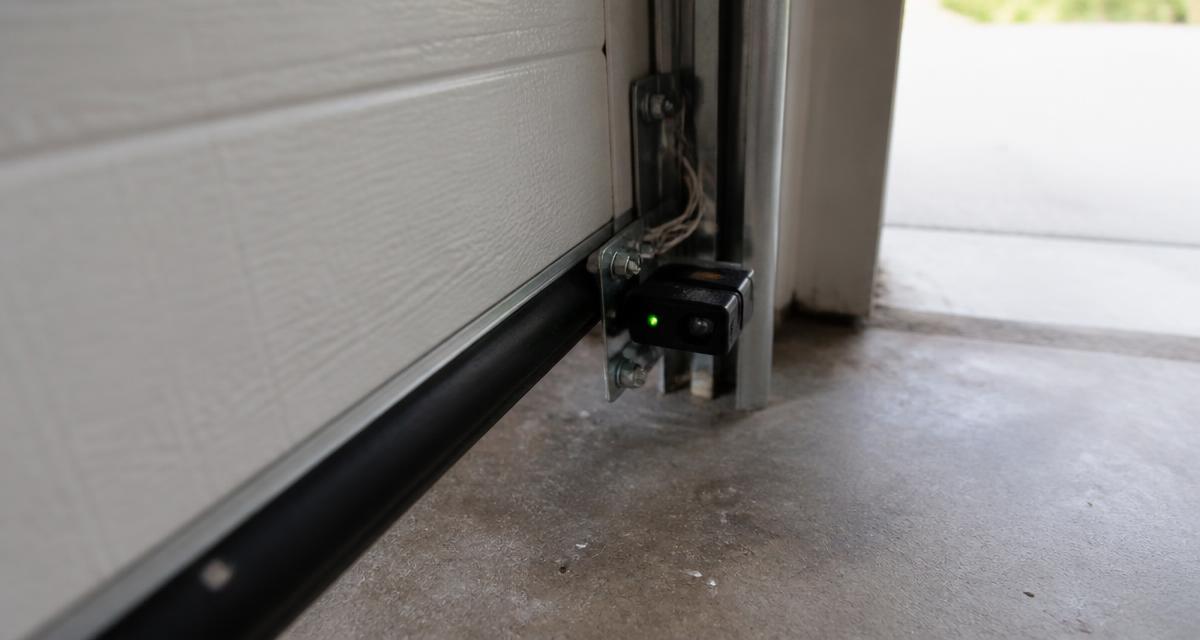
A garage door that starts down then reverses, or won't move at all with the opener lights flashing, is one of the most common service calls we get across the Charlotte metro. The good news: many of these cases are caused by a small, fixable issue. Here's a safe, step-by-step guide to diagnosing the problem before you call for repair.
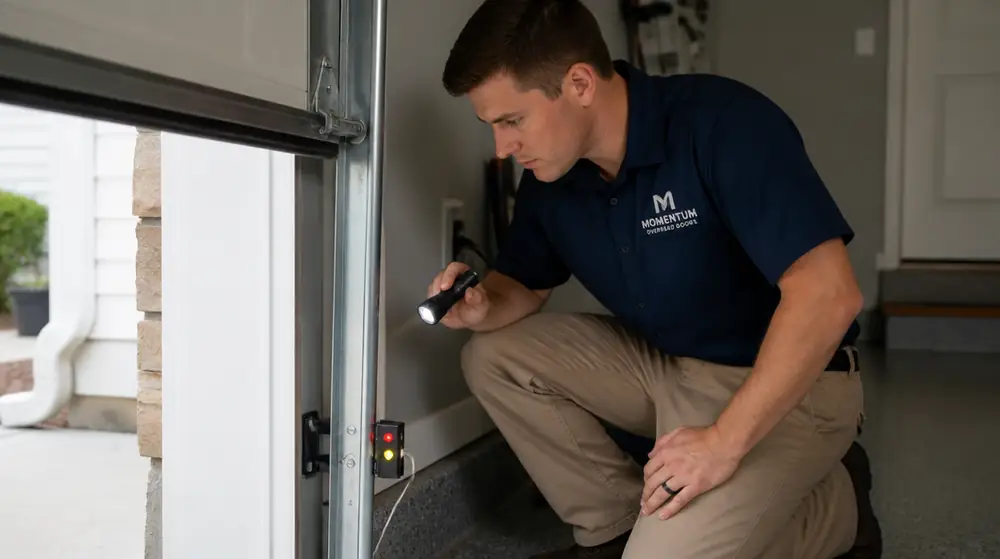
1. Check the safety sensors
The two small photo-eye sensors sit near the floor on each side of the door track. They send an invisible beam across the opening. If that beam is interrupted, the opener reverses the door or refuses to close.
- Look for steady lights. One sensor should show a steady green or amber light, and the other a steady red. If either is blinking, off, or a different color, they're out of alignment.
- Clean the lenses. A thin layer of dust, spider web, or grass clippings can block the beam. Wipe each lens gently with a soft cloth.
- Check for obstructions. Move bikes, storage bins, trash cans, or anything that could break the beam — even temporarily.
- Realign them. Loosen the wing nut, pivot the sensor until the opposing light glows steady, then tighten it back down.
2. Watch the opener lights
Most modern openers flash the wall-button light or the overhead light when the safety sensor circuit is broken. On LiftMaster and Chamberlain units, a 10-blink pattern is the classic sensor-error signal. If you see flashing, return to the sensor checklist above. No flashing but the door still won't close? Move on to the tracks and travel limits.
3. Inspect the track and rollers
A bent track, a roller that has jumped out, or a dented bottom section can add enough resistance that the opener thinks it's hitting something. Common signs include:
- The door moves a few inches then stops or reverses.
- You hear a grinding or rubbing sound as the door moves.
- One side of the door sits lower than the other when partially open.
- The track looks visibly bent or a roller is hanging outside the rail.
Do not try to force the door closed if the track is damaged. A forced closure can bend the rail further, pop more rollers, or tear the bottom bracket. This is usually a same-day repair for our Charlotte-area technicians.
4. Test the limit switch settings
The opener's travel limits tell the motor how far to move the door. If the down-limit is set too far, the door may hit the floor hard and reverse. If it's set too short, the door stops above the ground. Look for small screws or dials on the opener motor head labeled "Up" and "Down" or "Open" and "Close." Make very small adjustments — a quarter-turn at a time — and test. If the motor is newer, limits may be programmed through the wall console menu.
5. When to call a pro
Call Momentum Overhead Doors if the door is off the track, the springs look broken, the cables are loose, or the opener motor hums but the door won't move. Garage door springs are under high tension and can cause serious injury if handled incorrectly. We're available for same-day and emergency garage door repair across Charlotte, NC and surrounding areas.
Quick troubleshooting checklist
- Are both sensor LEDs steady? Realign or clean them.
- Is anything blocking the sensor beam? Move the object.
- Are the opener lights flashing? That's almost always a sensor issue.
- Does the door move freely by hand when disconnected? If not, check tracks and rollers.
- Does the door close too far or not far enough? Adjust the down-limit carefully.
Frequently asked questions
Why does my garage door start to close then reverse?
The most common cause is misaligned or dirty safety sensors. When the invisible beam between the two photo eyes is broken, the opener reverses the door as a safety measure. Clean the lenses, check the LED colors, and make sure both sensors point directly at each other.
Why are the opener lights blinking when I try to close the door?
A flashing wall-button or opener light usually means the safety sensor circuit is interrupted. On most LiftMaster, Chamberlain, and Genie units, 10 flashes point to a sensor issue — loose wiring, a blocked beam, or sensors knocked out of alignment.
Can sun glare stop my garage door from closing?
Yes. Direct afternoon sunlight can blind the receiving sensor and make the opener think something is in the path. Try shading the sensor slightly or swapping the transmitter and receiver sides if one is more exposed to sun.
What if the track is bent or the rollers are off?
A damaged vertical or horizontal track, or a roller that has popped out, creates enough resistance to trigger the opener's force protection. Do not force the door down — that can bend the track further. Call a technician to realign the track and inspect the rollers.
How do I know if the limit switch needs adjustment?
If the door closes all the way but immediately opens back up, or stops short of the floor, the down-limit or travel settings may be off. Small adjustments to the limit screws or travel dials can fix it, but if you're unsure, let a pro handle it — incorrect settings can strain the motor.
Related reading
- Garage door repair services
- Garage door opener repair
- Garage door spring repair
- Garage door repair pricing
Still stuck? We can fix it today.
Same-day garage door repair across Charlotte, NC and the surrounding metro. Call or book a free quote online.
Ready to fix it?
If the sensors and tracks check out, the fix is usually mechanical — we will find it.
- Garage door repairSame-day diagnosis with flat-rate written pricing.
- Opener repairLogic boards, gears, sensors and remotes fixed on site.