

Buying Guide
Insulated Garage Doors: A Charlotte Buyer's Guide to R-Value
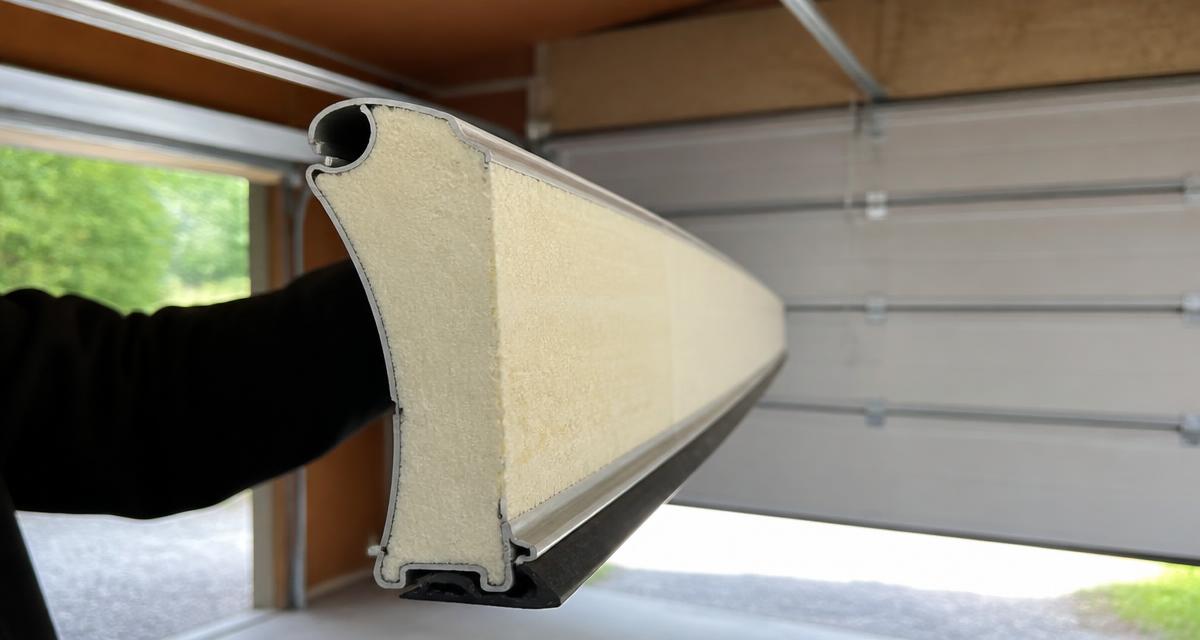
Insulation is the single biggest upcharge on a new garage door quote, and the R-value numbers on the brochure aren't as straightforward as they look. Here's what actually matters in the Carolina climate.
Short answer
If your garage is attached — especially with a bonus room or bedroom above it — get an insulated door in the R-9 to R-13 range with polyurethane foam. Expect it to add roughly $400–$900 on a double door. If the garage is detached and used only for parking, a non-insulated steel door is fine and the money is better spent on a quieter opener and nylon rollers.
What R-value actually measures
R-value is resistance to heat flow — higher is better. The catch is that manufacturers publish it two ways. Some quote the R-value of the insulation core alone; others quote a whole-door figure that accounts for the steel skins, section joints, and frame. Two doors both labeled "R-12" can perform differently. Ask which number you're being shown, and compare doors within the same brand's lineup where the measurement method is consistent.
The weatherseal matters as much as the core. A high-R door with a cracked bottom seal and no perimeter stop weatherstripping will underperform a mid-R door that's sealed properly. Air leakage is the loss most people actually feel.
Polystyrene vs. polyurethane
| Factor | Polystyrene | Polyurethane |
|---|---|---|
| Typical R-value | R-6 to R-9 | R-12 to R-18+ |
| How it's installed | Rigid panel slid into the section | Foamed in place, bonded to both skins |
| Panel stiffness | Moderate — can flex and dent | High — noticeably dent-resistant |
| Noise | Some damping | Significantly quieter |
| Upcharge (double door) | +$250–$500 | +$550–$900 |
Which R-value makes sense for a Charlotte home
- Detached garage, parking only — R-0 to R-6. No shared walls means little to gain thermally. Choose based on dent resistance and looks.
- Attached garage, no room above — R-9 to R-12. The shared wall to the house is the leak path. A mid-range polyurethane door pulls peak summer garage temps down meaningfully.
- Bonus room or bedroom above — R-12 to R-16. This is the biggest comfort win we see in Charlotte. That room over the garage is almost always the hottest room in the house in July.
- Conditioned garage, gym, or workshop — R-16+. If you're running a mini-split out there, the door is your weakest wall. Go as high as the lineup allows and add full perimeter weatherstripping.
What insulation does besides temperature
Two benefits get undersold. First, durability: a foam-bonded section is far stiffer than a hollow one, so basketballs, bumpers, and wind gusts leave fewer dents. Second, sound: insulated sections don't drum. Combined with nylon rollers and a belt-drive opener, an insulated door is the difference between waking the house at 6 a.m. and not.
Don't forget the spring re-sizing
An insulated double door can weigh 40–90 lbs more than the non-insulated version. The torsion springs must be re-sized to the new weight — reusing old springs on a heavier door is the single most common shortcut we find on cheap installs, and it burns out both the springs and the opener within a couple of years. Every Momentum installation includes springs matched to the actual door weight and an opener force check.
Keep reading
- Standard garage door sizes and how to measure your opening
- New garage door installation cost in Charlotte
- Garage door insulation guide
- Overhead door types, repairs, and service
Frequently asked questions
Want a side-by-side quote?
We'll price the same door insulated and non-insulated so you can see exactly what the upcharge buys on your garage — free, across the Charlotte metro.
Ready to fix it?
Ready for a quieter, warmer garage? We install insulated doors across the Carolinas.
- New door installationInsulated steel and carriage-house doors, free estimates.
- Garage door replacementFull door replacement with haul-away and warranty.