

Emergency Guide
Garage Door Cable Snapped? Here's What's Actually Wrong
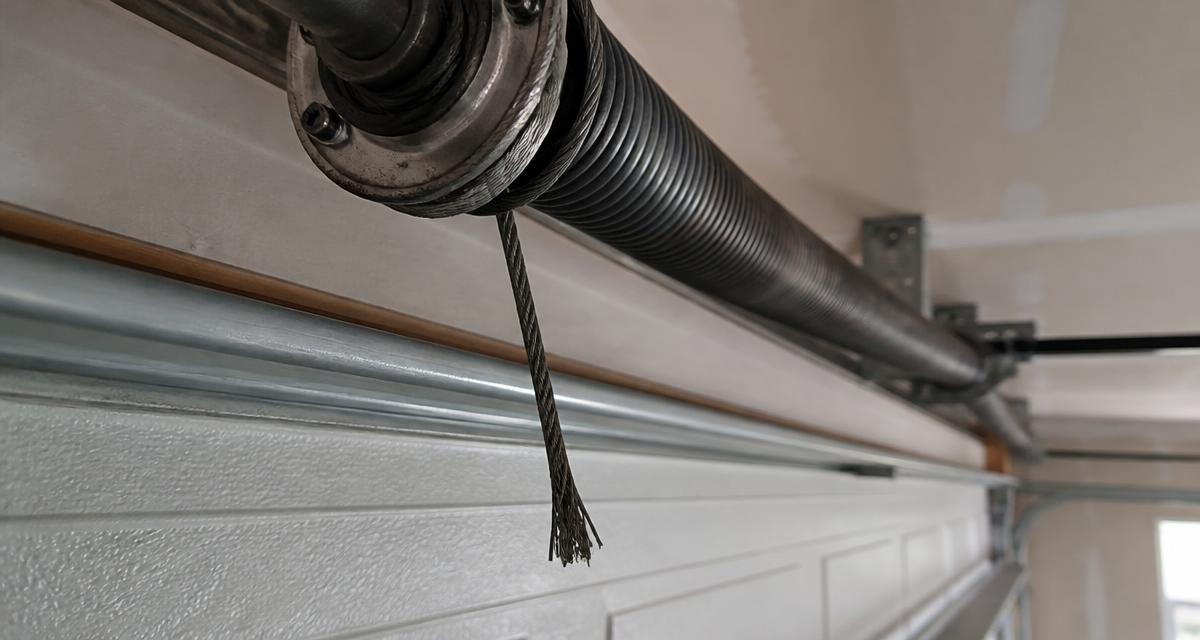
When a garage door fails suddenly, almost everyone says the same thing when they call: "I think the spring broke." Sometimes it did. Just as often, it's a lift cable — and the two failures need different parts, cost different amounts, and look completely different once you know where to look.
Before anything else
Don't run the opener and don't try to lift the door by hand. With one cable gone the door is loaded unevenly and can twist or drop on that side. Unplug the opener so nobody cycles it, keep the opening clear, and call for service.
How to tell a snapped cable from a broken spring
| Clue | Broken spring | Snapped cable |
|---|---|---|
| Where to look | Torsion shaft above the door | Both sides, floor to drum |
| Visual | Two-inch gap in the coil | Slack, frayed, or unspooled cable |
| Sound at failure | One loud bang, like a gunshot | Sharp metallic snap or twang |
| Door position | Level but extremely heavy | Crooked — one side lower |
| Opener behavior | Strains, lifts a few inches, reverses | Runs but door racks or jams in the track |
| Typical fix | Spring pair replacement | Cable pair replacement (± drums) |
It's also common to have both at once: a spring breaks, the shock load hits an already-worn cable, and the cable goes too. That's why a good technician inspects the whole counterbalance system rather than swapping one part.
Why garage door cables snap
- Fraying at the flex points. Cables bend hardest at the bottom bracket and where they wrap the drum. Strands break one at a time until the remaining wire can't carry the load.
- Rust. Carolina humidity plus water sitting at the floor line corrodes the bottom few inches of cable — the exact section under the most stress.
- Drum misalignment. If a drum loosens on the shaft, the cable spools unevenly, overlaps itself, and abrades until it fails.
- Binding or off-track operation. A door that drags sideways puts lateral load on cables they aren't designed for. See off-track repair.
- Impact. Bumping the bottom bracket area with a vehicle, mower, or ladder kinks the cable and creates a failure point.
- Spring failure shock load. When a spring lets go, the energy transfer often takes an aging cable with it.
Is a snapped cable dangerous?
Yes — and specifically in a way that's easy to underestimate, because the door often still looks mostly normal. Once one cable is gone, all of the spring's force routes through the remaining side. The door can lurch, twist in the opening, or drop unevenly. Cables also stay under tension when the door is closed, so "it's down, it's safe" isn't true.
We don't recommend DIY cable replacement for the same reason we don't recommend DIY spring work: rewinding a cable means unloading the torsion spring with proper winding bars, clamping the door in position, and re-tensioning to an exact turn count for the door's weight. Get that wrong and the door slams or the spring releases. Read DIY vs. professional spring repair for the full reasoning — it applies identically here.
Garage door cable repair cost in Charlotte
| Job | Typical installed cost |
|---|---|
| Single cable replacement | $150 – $250 |
| Both cables (matched pair) | $200 – $350 |
| Cables + drum replacement | $275 – $475 |
| Cables + spring replacement (combined) | $400 – $700 |
| Cable failure that pulled the door off track | $325 – $600 |
Charlotte-metro residential ranges, quoted flat-rate in writing before work starts. Compare against spring replacement costs and the broader repair cost guide.
Cable replacement vs. full spring system service
Technicians often recommend doing cables and springs together, and homeowners are right to be skeptical of any recommendation that increases the bill. Here's the honest logic so you can judge it yourself:
- They age together. Cables and springs have been through the exact same cycle count on the same door.
- The labor overlaps almost entirely. Both jobs require unloading the spring and clamping the door. Doing them separately means paying for that setup twice.
- Fraying hides inside the drum. The most worn section of a cable is the part you can't see, which is why "the cables looked fine" is a poor indicator.
- A new spring shock-loads an old cable. Fresh spring tension on a fatigued cable is a common cause of a repeat call within months.
When it's not worth bundling: cables that failed from a one-off impact or a misaligned drum on an otherwise young door with recently replaced springs. In that case, replace the cables, fix the drum, and leave the springs alone. Any technician should be willing to explain which situation you're in and show you the worn part.
Preventing the next cable failure
- Inspect the bottom 12 inches of both cables twice a year for rust, kinks, or broken strands.
- Keep water from pooling at the door line; a good bottom seal helps more than people expect.
- Fix binding, noise, or crooked travel early — those stress cables on every cycle.
- Book an annual tune-up that includes a cable, drum, and spring balance check.
Frequently asked questions
How do I know if it's a broken cable or a broken spring?
Look in two places. Above the door on the torsion shaft: a broken spring shows an obvious two-inch gap in the coil. Along each side of the door: a broken cable hangs slack, is unspooled off its drum, or is coiled on the floor, and that side of the door usually sits lower than the other. A broken spring makes one loud bang; a broken cable usually makes a metallic snap followed by the door going crooked.
Why do garage door cables snap?
Cables fail from gradual fraying at the bottom bracket and drum where they flex most, rust from moisture sitting at the floor line, misaligned or loose drums that let the cable spool unevenly, a door that binds because it's off track, and impact damage. Cables also frequently break shortly after a spring breaks, because the sudden shock load exceeds what a worn cable can take.
Is a snapped garage door cable dangerous?
Yes. With one cable gone, the spring's force is applied unevenly and the door can drop or twist on that side. Do not operate the opener or try to lift the door by hand. Keep vehicles, pets, and people out of the opening and call a technician. Cables are under load even when the door is closed.
How much does garage door cable replacement cost in Charlotte?
A single cable typically runs $150–$250 installed. Replacing both cables as a matched pair runs $200–$350. Cable plus drum replacement runs $275–$475. If the cable failure also pulled the door off track, expect $325–$600 for the combined job.
Should both garage door cables be replaced at once?
Yes. Both cables have the same age, cycle count, and exposure, so a second failure is usually not far behind. Matched cables also keep the door level; mixing a new cable with a stretched one causes the door to rack in the opening, which stresses rollers, track, and panels.
Can I replace a garage door cable myself?
We don't recommend it. Rewinding a cable requires unloading the torsion spring with proper winding bars, clamping the door, and re-tensioning to the exact turn count for the door's weight. Errors here cause the door to slam shut or the spring to release violently. It is one of the more common sources of serious garage injuries.
How long do garage door cables last?
Typically 8–15 years, closely tracking spring life. Because cables and springs age together and cables fray invisibly inside the drum, most technicians replace cables at the same time as springs — it adds little to the visit and prevents a second service call within months.
Related reading
- Garage door off track: causes & fixes
- Spring replacement cost
- What causes springs to break
- Cable repair service
Broken cable? We treat it as an emergency.
We stock cables, drums, and springs on every truck and secure the door before anything else. 24/7 dispatch across Charlotte and the Carolinas, flat-rate written pricing before any work starts.
Ready to fix it?
A snapped cable leaves the door unsafe to operate. We treat it as an emergency.
- Cable repairSnapped cables, drums and off-track doors made safe fast.
- 24/7 emergency repairLive answer around the clock, ~90 minute typical arrival.