

Opener Guide
How Do Garage Door Openers Work?
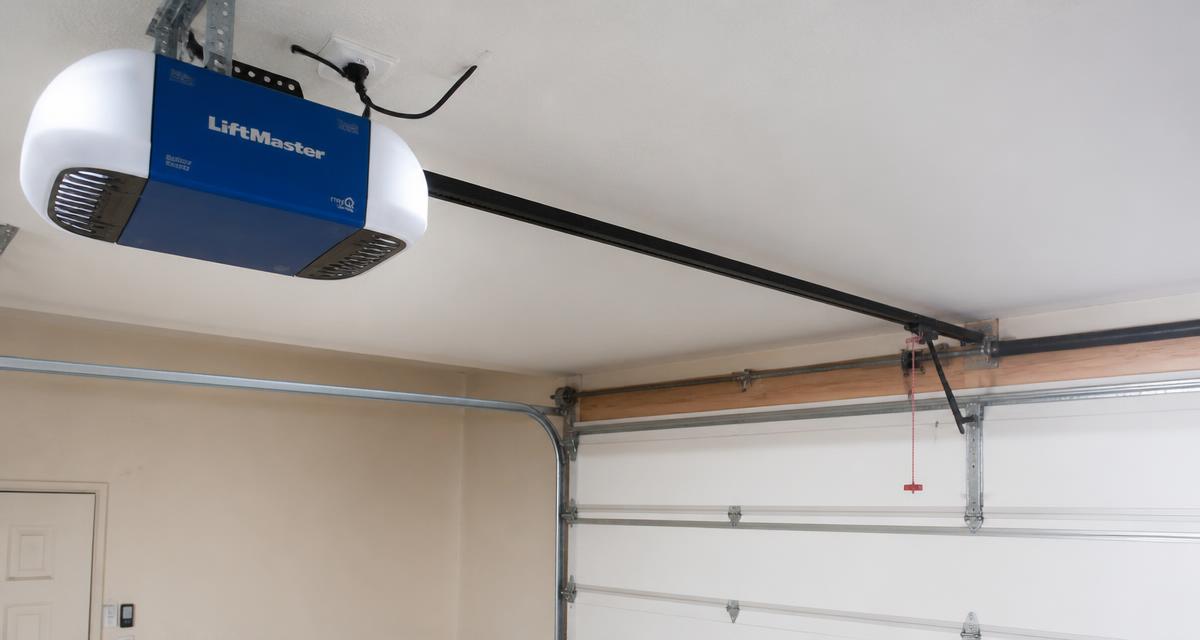
Almost everyone assumes the motor bolted to the ceiling lifts the garage door. It doesn't. The springs do nearly all the lifting; the opener just supplies a small nudge and controls where the door starts and stops. Understanding that one fact explains most of the problems homeowners run into.
TL;DR
Springs counterbalance the door's weight down to about 8–12 lbs. A 1/2–1-1/4 HP motor drives a trolley along a rail (via chain, belt, or screw) that pulls an arm attached to the door. Travel limits set the stop points, force settings and photo-eye sensors trigger auto-reverse, and a rolling-code radio receiver authenticates your remote.
The parts, and what each one does
- Torsion or extension springs. Store mechanical energy and counterbalance the door. The real workhorse of the system.
- Motor head. Contains the motor, gearbox, logic board, radio receiver, capacitor, and lights.
- Rail and trolley. The track the trolley travels along, driven by a chain, belt, or screw.
- Door arm. Connects the trolley to the top section of the door.
- Emergency release cord. The red handle that disconnects the trolley so you can operate the door by hand.
- Photo-eye safety sensors. Infrared beam across the opening, about 6 inches off the floor.
- Wall console. Hardwired control with light, lock, and often motion-activated lighting.
- Remotes and keypad. Radio transmitters paired to the receiver via the Learn button.
Step by step: what happens when you press the button
- The remote transmits. A short burst on 315 or 390 MHz carrying an encrypted, single-use rolling code.
- The receiver validates it. The logic board compares the code against its synchronized sequence. Match, and the command is accepted.
- Safety checks run. On a close command, the opener confirms the photo-eye beam is intact. Broken beam, no close.
- The motor engages. Power goes to the motor through the capacitor; the gearbox reduces speed and multiplies torque.
- The trolley travels. Chain, belt, or screw moves the trolley along the rail, pulling the door arm.
- Springs unwind (or wind). The counterbalance carries the weight; the motor moves roughly 10 lbs of net load.
- Force monitoring. Current draw is watched throughout. Unexpected resistance triggers stop or reverse.
- Travel limit reached. The opener cuts power at the learned open or closed position, and the courtesy lights time out.
Drive types compared
| Drive type | Noise | Typical life | Best for |
|---|---|---|---|
| Chain drive | Loud | 10–15 yrs | Detached garages, budget replacements |
| Belt drive | Very quiet | 10–15 yrs | Garages under bedrooms or living space |
| Screw drive | Moderate | 10–15 yrs | Heavy doors, extreme temperature swings |
| Wall-mount (jackshaft) | Quiet | 15+ yrs | High/cathedral ceilings, storage above |
| Direct drive | Very quiet | 15+ yrs | Low-maintenance installs, single moving part |
A deeper comparison of the two most common options is in belt drive vs. chain drive.
Horsepower: how much do you need?
- 1/2 HP — standard single or lightweight double doors. Still the most common residential size.
- 3/4 HP — insulated double doors and most modern installs; smoother starts, less strain.
- 1 to 1-1/4 HP — heavy carriage-house, solid wood, or oversized doors.
Because the springs carry the weight, more horsepower doesn't fix a heavy door — correct spring sizing does. Undersized springs are the most common reason an opener burns out early.
The safety systems, and why they matter
Since 1993, UL 325 has required two independent reversal systems on residential openers:
- Photo-eye sensors. Break the beam and a closing door reverses immediately.
- Force / contact reversal. If the door hits an obstruction, the current spike reverses travel. Test it monthly by laying a 2x4 flat under the door and closing it — the door should touch and reverse.
If your opener predates 1993 or the sensors have been bypassed with a jumper, that's a genuine safety hazard and worth addressing right away.
What modern openers add
- Wi-Fi and app control (myQ, Aladdin Connect) — open, close, and get alerts remotely.
- Battery backup — required by law in California and simply practical during Carolina storm outages.
- Built-in cameras and smart locks for package delivery.
- DC motors with soft start/stop — quieter operation and less wear on the door hardware.
Common symptoms explained by the mechanics
- Motor runs, door doesn't move. Stripped drive gear, or the trolley is disconnected from the emergency release.
- Door opens a foot and stops. Broken spring — the opener hits its force limit instantly.
- Door closes then immediately reverses. Misaligned photo eyes or a close-force setting that's too tight.
- Hums but won't start. Failed start capacitor.
- Remote works, wall button doesn't. Broken low-voltage bell wire or a failed console.
Frequently asked questions
How does a garage door opener work?
A garage door opener does not lift the door — the torsion or extension springs counterbalance almost all of its weight. The opener is a small motor (typically 1/2 to 1-1/4 HP) that drives a trolley along a rail using a chain, belt, or screw. The trolley pulls an arm attached to the top of the door, guiding it up and down. Travel limits tell it where to stop, a force sensor and photo-eye sensors tell it when to reverse, and a radio receiver listens for a coded signal from your remote.
Do garage door openers lift the whole door?
No. A double garage door weighs 150–350 lbs, far more than a 1/2 HP motor could lift. The springs store energy when the door closes and release it when the door opens, leaving only about 8–12 lbs of net weight. The opener simply supplies that small remaining force and controls the motion. This is why a door with a broken spring will stall or reverse even though the motor runs perfectly.
What is the difference between chain, belt, and screw drive openers?
Chain drive uses a metal chain — cheapest and loudest. Belt drive uses a reinforced rubber belt — quietest, best for garages under living space. Screw drive uses a threaded steel rod — fewer moving parts, moderate noise, and it needs periodic greasing. Direct-drive and wall-mount (jackshaft) openers move the torsion shaft itself and free up ceiling space.
How do garage door safety sensors work?
Two photo-eye units mounted about 6 inches above the floor on each track form an invisible infrared beam. One transmits, one receives. If anything breaks the beam while the door is closing, the opener immediately reverses. Federal law (UL 325) has required them on residential openers since 1993. A blinking sensor LED usually means they are misaligned, dirty, or the wire is damaged.
What is a rolling code on a garage door opener?
Rolling code (LiftMaster Security+, Genie Intellicode) changes the transmitted code every time you press the remote, using a synchronized algorithm shared by the remote and receiver. That prevents 'code grabbing,' where a thief records your signal and replays it. Openers made before roughly 1993 used fixed DIP-switch codes and are trivially easy to capture.
How does a garage door opener know when to stop?
Travel limits define the fully open and fully closed positions — set mechanically with screws on older units, or electronically by running a learn cycle on newer ones. Separately, force settings monitor how much current the motor draws; if resistance exceeds the threshold (something in the way, or a binding door), the opener stops or reverses.
How long do garage door openers last?
Typically 10–15 years, or roughly 15,000–20,000 cycles. Drive gears, capacitors, and logic boards are the usual failure points. Once a unit is over 12 years old and needs a $250+ repair, replacement usually makes more financial sense — and gains you rolling-code security, battery backup, and Wi-Fi control.
Related reading
- Garage door remote not working
- Garage door opener installation cost
- How to program a garage door opener
- Openers we install
Opener acting up?
We diagnose gears, boards, sensors, and spring balance on site — flat-rate written pricing before any work starts, same-day across Charlotte and the Carolinas.
Ready to fix it?
Know how it works, but it still will not? We diagnose openers same day.
- Opener repairLogic boards, gears, sensors and remotes fixed on site.
- New opener installationLiftMaster belt-drive openers installed and programmed.