

Emergency Safety Guide
How to Manually Open Your Garage Door During a Power Outage
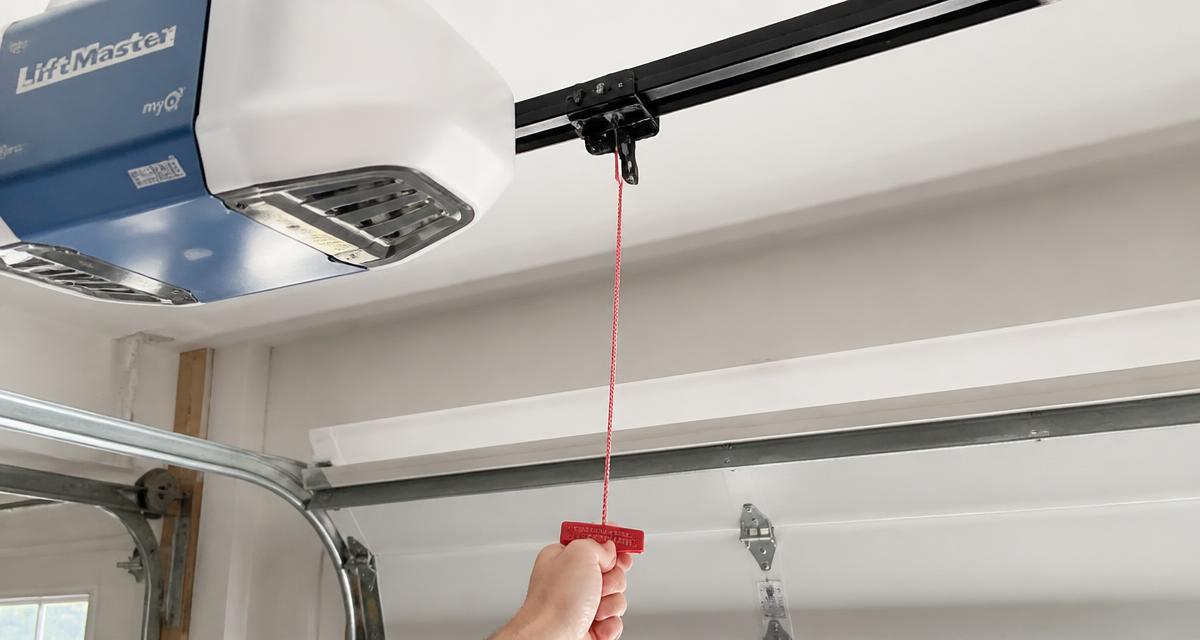
A power outage, storm, or opener failure can leave your garage door frozen in place — and your car trapped inside when you need to leave most. The good news is that every modern garage door has a built-in manual override. The bad news is that using it wrong can bend tracks, damage the opener, or cause serious injury if a spring is broken. This guide walks you through the safe way to use the red emergency release cord, when to stop, and how to get Momentum's 24/7 emergency team on the way.
Quick safety warning
If the door feels extremely heavy, looks crooked, or you see a gap in the spring above the door, do not attempt to lift it manually. A broken spring means the door can weigh 150–300 lbs and may fall without warning. Call our emergency line immediately.
Before you touch the red cord
- Make sure the door is fully closed. The release cord is designed to be pulled when the door is down. Pulling it while the door is open can cause an unbalanced door to slam shut.
- Unplug the opener. During an outage this is usually automatic, but after a storm with flickering power, unplugging prevents the motor from engaging unexpectedly while you're working on the door.
- Clear the area. Move vehicles, bikes, and people away from the door's path. If the door has been malfunctioning, it may not travel straight down.
- Inspect the springs and cables. Look for a visible gap in the torsion spring above the door, a loose or frayed cable, or a lopsided door. Any of these means the door is not safe to lift manually.
Step-by-step: manually opening the door
- Confirm the door is fully closed.
The emergency release should only be used when the door is in the down position. An open door under tension can drop when disengaged from the opener.
- Locate the red emergency release cord.
It hangs from the trolley on the opener rail, typically near the motor. The handle is bright red so you can find it in a dark garage.
- Pull the cord down and toward the door.
Pull straight down, then angle the handle toward the door. You will hear or feel a click as the trolley separates from the opener carriage. The door is now in manual mode.
- Lift the door with both hands, standing in the center.
A balanced door should lift easily. If you have to strain, if the door is jerky, or if one side rises faster than the other, stop. This usually means a broken spring or cable.
- Secure the door if you leave it open.
Prop it with a sturdy object or clamp locking pliers onto the tracks just below the bottom rollers. Do not trust the opener to hold the door when it is disengaged.
- Re-engage the opener when power returns.
With the door fully closed, pull the red cord toward the motor unit or press the remote. The trolley will reconnect to the carriage during the next open cycle. Test once to confirm normal operation.
What never to do during a power outage or opener failure
- Do not pull the release cord while the door is moving or partially open.
- Do not stand directly under the door when lifting or lowering it.
- Do not use the emergency release as a routine way to operate the door — it accelerates wear on the trolley and carriage.
- Do not try to adjust, repair, or wind torsion springs yourself. The stored energy can cause severe injury or death.
Signs that a spring is broken — and why you should stop
Garage door springs offset 90% of the door's weight. When one breaks, the opener and your back are left to lift the entire load. Look for these signs:
- A visible 2–4 inch gap in the torsion spring above the door.
- The door feels "dead weight" or slams shut when you release it.
- The door is crooked or one side lifts faster than the other.
- You heard a loud bang from the garage recently, but nothing obvious fell.
If any of these are present, keep the door closed and unplugged. Forcing the door can bend the tracks, snap a cable, or pull the door off its rollers. Call Momentum's emergency line and we'll dispatch a technician with the right springs and tools.
Why this guide matters for Charlotte homeowners
Charlotte and the surrounding Carolinas see more than their share of storms, power flickers, and lightning strikes. We handle emergency garage door calls year-round, and the majority of them could have been handled safely if the homeowner knew how to use the release cord. This guide is meant to get you out of a jam — not to replace a professional repair. If you are unsure, the door is heavy, or the spring looks wrong, it is always safer to call us.
Related reading
- 24/7 emergency garage door repair in Charlotte
- Garage door spring repair and replacement
- Garage door opener repair and troubleshooting
- DIY vs. professional garage door spring repair
Frequently asked questions
Stuck in the garage? We answer emergency calls 24/7.
If the door is heavy, crooked, or you suspect a broken spring, don't risk it. Momentum Overhead Doors is insured and on call across Charlotte and the Carolinas.
Ready to fix it?
Once the car is out, get the door fixed properly — we run 24/7 dispatch.
- 24/7 emergency repairLive answer around the clock, ~90 minute typical arrival.
- Garage door repairSame-day diagnosis with flat-rate written pricing.