

Commercial Guide
Commercial Garage Door & Roll-Up Door Repair: What Charlotte Businesses Need to Know
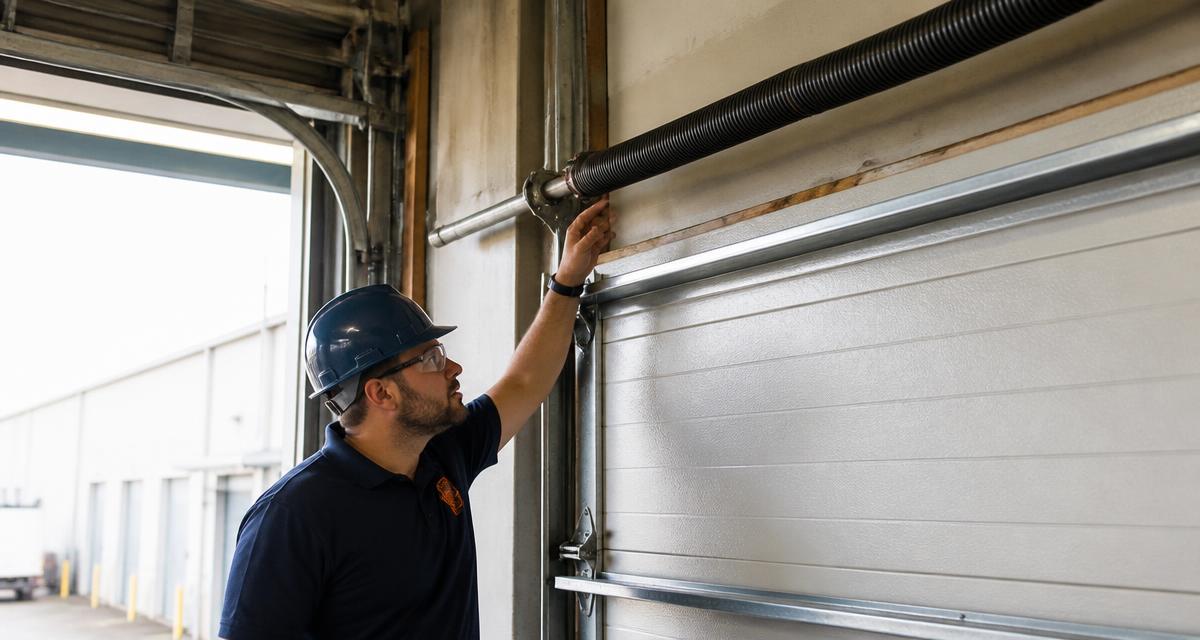
A commercial overhead door is not a big residential door. It runs ten to fifty times the cycles, uses heavier-gauge steel and larger torsion assemblies, is often a rolling steel curtain rather than sectional panels, and carries code and insurance obligations a house door never does. Diagnosing and servicing one requires different parts, different tooling, and a different response standard — because when a dock door is down, the business is down.
TL;DR
Commercial doors fail from high-cycle spring fatigue, operator burnout, curtain and track damage from forklift and vehicle impact, and safety-device faults that lock the door out for compliance reasons. Response time is the real cost driver — downtime usually exceeds the repair. Preventive maintenance scheduled by cycle count, not calendar, is what keeps these doors running.
Types of commercial doors we service
- Sectional steel overhead doors. Insulated or non-insulated panels on heavy-duty track — warehouses, service bays, fire stations, fleet garages.
- Rolling steel (coiling) service doors. Interlocking slats that coil into a barrel above the opening. Standard where headroom is tight or security matters.
- Rolling grilles and counter shutters. Retail storefronts, mall bays, concession and service counters.
- Fire-rated rolling doors. Automatic-closing doors tied to the alarm system, with their own periodic drop-test requirements.
- High-speed roll-up doors. Fabric or rigid curtains cycling hundreds of times daily in cold storage, food processing, and manufacturing.
- Dock equipment interfaces. Levelers, bumpers, seals, and the door hardware that interacts with them.
Full scope on the commercial overhead doors service page.
Common commercial door failures
- High-cycle spring fatigue. A residential spring is rated around 10,000 cycles. A dock door running 30 cycles a day burns through that in under a year, which is why commercial doors get 50,000 to 100,000-cycle springs sized to the actual duty. Under-specced springs are the most common thing we find on doors that "keep breaking."
- Operator burnout on high-traffic doors. Continuous-duty jackshaft and gear-head operators are built for repeated cycling; a light-duty unit installed to save money will overheat, trip thermal protection, and fail early.
- Curtain and slat damage. Forklift strikes bend slats and guides on rolling steel doors. A single deformed slat can bind the whole curtain.
- Track, roller, and bottom bar wear. Heavy sectional doors eat rollers and hinges quickly, and a worn bottom bar compromises the seal and the safety edge mounting.
- Safety device and code compliance faults. Monitored sensing edges and photo eyes will lock a door out when they fail — by design. Bypassing them is a liability and insurance exposure, not a fix.
- Weather and drainage damage. Guides and bottom bars corrode where water sits, especially on wash bays and older Carolina industrial slabs.
Why commercial response time matters more than price
For most commercial customers the repair invoice isn't the expensive part. A blocked loading dock stops inbound and outbound freight, idles labor, and pushes delivery windows. A stuck service-bay door takes a revenue bay offline. A retail grille that won't close is a security and staffing problem at close of business.
That's why we dispatch commercial calls 24/7, prioritize maintenance-agreement accounts, and carry common commercial springs, rollers, sensing edges, and operator parts on the truck. Where a part has to be made to size, we secure the opening — chain hoist operation, manual chain, or temporary securing — so the business can keep working while the part is fabricated.
Multifamily & apartment community access
Multifamily properties sit between residential and commercial: dozens of individual unit doors on residential hardware, plus parking structure doors, grilles, and the access control tied to them — gate operators, entry systems, credential readers, and callboxes. We work with property managers and HOA boards across the Charlotte metro and can handle both sides of that, invoiced per work order or under a standing agreement, so maintenance isn't split across two vendors who blame each other.
Preventive maintenance & service contracts
Commercial door maintenance should be scheduled by cycle count, not the calendar:
| Door usage | Suggested interval | Focus |
|---|---|---|
| Under 5 cycles/day | Annual | Lube, balance, hardware, safety test |
| 5–20 cycles/day | Semi-annual | Above, plus spring and cable inspection |
| 20–50 cycles/day | Quarterly | Operator duty check, edge testing, wear parts |
| 50+ cycles/day / high-speed | Monthly | Curtain, guides, controls, photo eyes |
| Fire-rated rolling doors | Per code schedule | Documented drop testing and reset |
A maintenance agreement also gets you documentation — dated inspection and safety-test records are what insurers and safety auditors ask for after an incident. See maintenance & tune-ups.
Commercial repair cost ranges
| Job | Typical range |
|---|---|
| Commercial operator repair (board, motor, limits) | $250 – $650 |
| High-cycle torsion spring replacement | $450 – $1,200 |
| Rolling steel curtain re-track / realignment | $400 – $900 |
| Safety edge or photo-eye replacement | $250 – $600 |
| Bottom bar / astragal replacement | $400 – $1,100 |
| Slat or panel section replacement | Quoted per opening |
| Commercial operator replacement (installed) | $1,500 – $4,000 |
Commercial pricing varies more than residential because door size, gauge, mounting, and access equipment differ per opening. We survey the door and quote in writing before work starts.
Frequently asked questions
What's the difference between commercial and residential garage door repair?
Commercial doors run far higher cycle counts, use heavier-gauge steel and larger torsion assemblies, and are often rolling steel curtains rather than sectional panels. They also carry code and insurance obligations residential doors don't — safety edges, fire-door drop testing, and documented maintenance. Parts are frequently made to order for the opening rather than pulled from a residential stock list.
How much does commercial garage door repair cost?
Commercial service calls generally start higher than residential because of door weight, access equipment, and part sizing. Typical ranges in the Charlotte market: operator repair $250–$650, high-cycle spring replacement $450–$1,200, roller/curtain re-track on rolling steel $400–$900, safety edge or photo-eye replacement $250–$600, and full commercial operator replacement $1,500–$4,000 installed. Exact pricing depends on door size, gauge, and mounting.
How fast can you respond to a commercial door failure?
We dispatch 24/7 for commercial doors because a stuck dock door stops shipping and a stuck entry door is a security problem. For most Charlotte-metro sites we target same-day response, and we prioritize accounts on a preventive maintenance agreement.
What types of commercial doors do you service?
Sectional steel overhead doors, rolling steel (coiling) service doors, rolling grilles, counter shutters, fire-rated rolling doors, high-speed roll-up doors, and dock equipment interfaces. We also service the commercial operators that run them — jackshaft, hoist, trolley, and gear-head units.
Do commercial garage doors need a safety edge?
Commercial operators in constant-pressure or momentary-contact configurations generally require an entrapment protection device — most commonly a monitored sensing edge on the bottom bar, often combined with photo eyes. Requirements come from the operator's UL listing and the installation configuration, and insurers frequently ask for documentation of functional testing.
How often should commercial garage doors be serviced?
Service frequency should follow cycle count, not the calendar. Low-use doors are fine annually. Doors running 20+ cycles a day should be inspected quarterly. High-traffic dock doors and high-speed doors often warrant monthly checks. Fire-rated rolling doors have their own periodic drop-test requirements.
Do you work with property managers and apartment communities?
Yes. We service multifamily and apartment communities across the Charlotte metro, including garage doors at individual units, community parking structures, and the access and entry systems tied to them. We can invoice per work order or under a standing maintenance agreement.
Related reading
- Commercial overhead doors service
- Maintenance & tune-ups
- What causes springs to break
- Overhead doors hub
Request a commercial quote
Dock doors, rolling steel, grilles, high-speed doors, and multifamily properties across the Charlotte metro and the Carolinas. 24/7 dispatch, written pricing, and maintenance agreements for facilities that can't afford downtime.
Ready to fix it?
Down commercial door costing you money? We prioritize business dispatch.
- Commercial overhead doorsRolling steel, sectional and dock doors kept running.
- 24/7 emergency repairLive answer around the clock, ~90 minute typical arrival.