

What to Do When Your Garage Door Won't Open (Before You Call a Repair Company)
Six quick checks you can safely do yourself before paying for a service call — some of these fix the problem in under a minute.
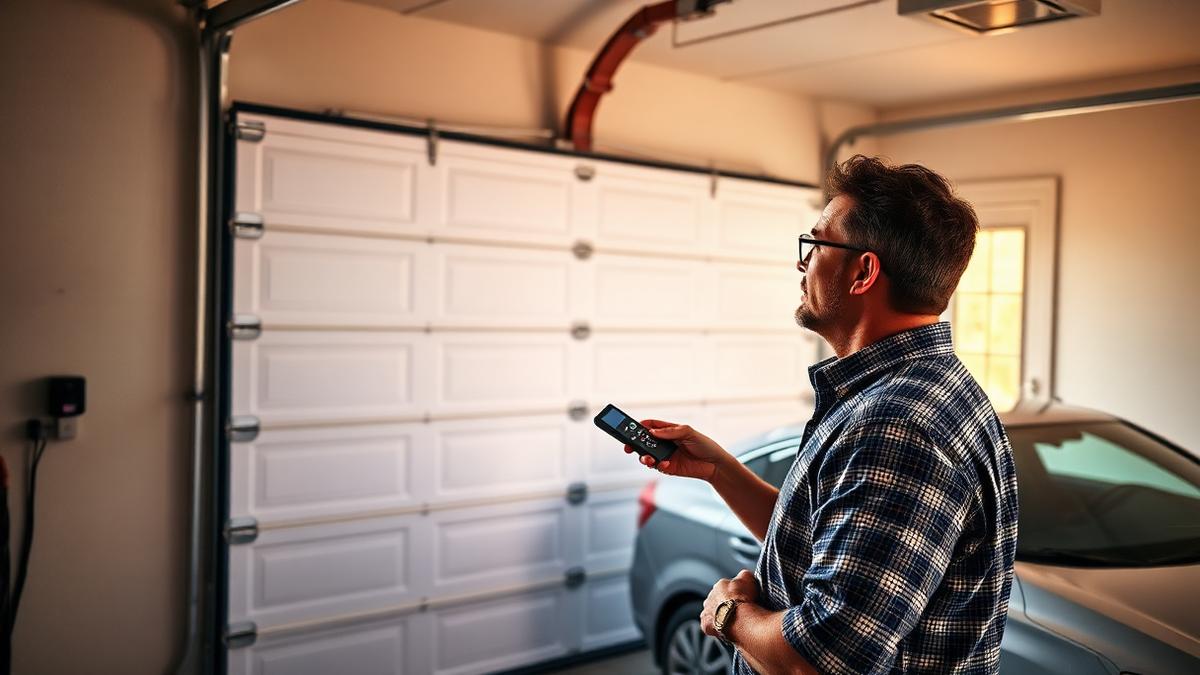
Before you call anyone, it's worth spending five minutes on some basic checks. A meaningful chunk of "my garage door won't open" calls turn out to be things you can fix yourself in under a minute — and even when it's a real repair, the info you gather here helps the tech quote and fix it faster.
Here are the checks to run, in order.
1. Check the wall button vs. the remote
Does the door respond to the wall-mounted button but not the remote? That points at the remote — usually a dead battery, occasionally a paired-remote issue. Try replacing the coin battery (most take a CR2032 or similar) and pressing the "learn" button on the opener to re-pair.
If nothing responds — not the wall button, not the remote, not the keypad — you're looking at a power or opener problem, not a remote problem. Skip to step 3.
2. Look at the safety sensors
On every opener made in the last 30 years, there are two small sensors mounted 4–6 inches above the floor on either side of the door opening. One has a solid green light; the other has a solid red or amber light. If either one is blinking, off, or misaligned, the door will refuse to close (and sometimes refuse to open all the way).
Causes are almost always simple: a broom or box bumped a sensor out of alignment, a spiderweb is blocking the beam, or a sensor got dusty. Wipe them off, gently tilt them until both lights are steady, and try again.
3. Check the power to the opener
Openers are on a ceiling outlet. Grab a step ladder and confirm the unit is plugged in. Then check the outlet with something else (phone charger, lamp). GFCI outlets can trip and cut power to the garage without you noticing — look for a "reset" button on nearby outlets or in your breaker panel.
4. Look at the emergency release cord
Every opener has a red cord hanging from the trolley (the part that rides along the rail and pulls the door open). If someone accidentally pulled it, the opener is disconnected from the door and will run without moving anything. You'll hear the motor but see no motion.
To re-engage: with the door closed, pull the cord toward the door (away from the motor) to reset the lever, then run the opener — it should re-latch onto the trolley on the next cycle. If that doesn't work, you can guide the lever back into engagement by hand.
5. Try lifting the door manually
With the emergency release pulled and the opener disconnected, try lifting the door yourself. You should be able to raise it fairly easily and it should hold in place around waist-height without falling.
- Won't budge, feels like dead weight: Almost certainly a broken spring. Don't force it. Call a pro.
- Comes up but slams down: Spring is weak or breaking. Call a pro.
- Comes up but grinds or catches: Roller, track, or cable issue.
- Comes up smoothly and holds: The door is fine — the problem is the opener.
6. Listen for the click when you press the button
Stand near the opener and press the wall button. If you hear a clear click but the motor doesn't engage, the logic board or motor capacitor has failed. If you hear nothing at all, it's a power issue (see step 3) or the wall button itself is dead.
When it's time to call
If you've worked through the list and the answer is a broken spring, snapped cable, off-track door, or dead opener — that's us. Any of those, you want a pro. But now you can tell whoever answers exactly what's happening, which usually means faster diagnosis and less time on-site.
And one thing to skip entirely: don't try to remove a broken spring or an off-track door yourself. Those are the two garage door repairs most likely to cause injury, and they're not worth the risk.
Need help with your garage door?
Call us at 704-614-4455 or request a free quote — same-day service across the Charlotte metro.