

5 Signs Your Garage Door Opener Is About to Fail
Openers rarely die without warning. Here are five signals your motor unit is trying to tell you it's on its last stretch — before you get stranded.
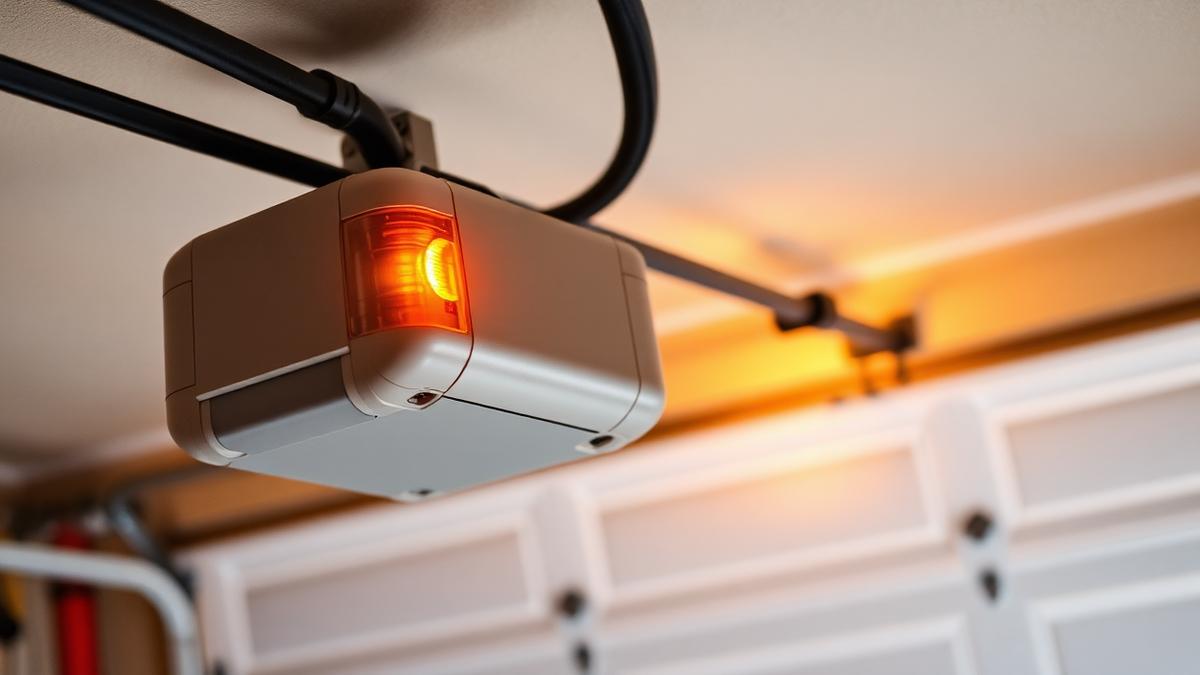
A garage door opener that's been running for 12–15 years doesn't usually quit overnight. Almost always, it drops hints for weeks or months before the final failure. If you catch those signs early, you can plan a replacement on your schedule instead of dealing with a car trapped in the garage on a rainy Tuesday morning.
Here are the five most common warning signs we hear about right before an opener gives up.
1. It hesitates when it starts
A healthy opener starts moving the instant you press the button. If you're noticing a half-second (or longer) pause between the button press and the door moving, the motor's starting capacitor is weakening. Capacitors are cheap parts, but on a very old opener it's usually a sign the rest of the unit is close behind.
2. Grinding, rattling, or a new humming sound
Openers are supposed to be relatively quiet. A chain drive is louder than a belt drive, but even a chain shouldn't rattle, grind, or hum. New noises usually point to one of three things: worn drive gears (very common on 10+ year units), a stripped trolley, or a failing motor. Any of them means the clock is ticking.
A quick note: sometimes the noise is actually the door itself, not the opener. Rollers, hinges, and springs all make sounds too. If your door is quiet when you lift it manually but loud when the opener runs it, that points at the opener.
3. It reverses partway or doesn't close all the way
Garage door openers use safety sensors and a force setting to know when to reverse. When the internal logic board starts to fail, you'll see weird behavior: the door closes, then bounces back up. Or it stops halfway. Or it only responds to the wall button, not the remote.
Before assuming the opener is toast, check the safety sensors on either side of the door — one is usually green, the other red, and they should be aligned. A bumped sensor can mimic opener failure. If sensors look good and the behavior continues, the logic board is likely on its way out.
4. The remote range keeps shrinking
Remotes should reliably work from anywhere in your driveway. If you're noticing you have to pull almost up to the door to get it to trigger, the receiver antenna or the logic board is degrading. Sometimes it's just a dead battery in the remote — try that first — but if fresh batteries don't help, the opener's receiver is aging.
5. It's over 15 years old
This one sounds obvious, but it's worth naming. Most residential openers last 12–18 years. If yours is a builder-grade unit installed with the house and the house is 15+ years old, you're living on borrowed time. Newer openers are quieter (belt drives are dramatically better than the old chain drives), come with LED lighting, MyQ smartphone control, and battery backup — which North Carolina requires on all new installs.
What to do about it
If you're seeing one or two of these signs, it doesn't mean run out and replace it tomorrow. But start budgeting. If you're seeing three or more, replacement is the smart move. Waiting until it fully dies almost always means paying emergency service pricing and taking whatever unit the tech has on the truck.
A belt-drive opener installed today runs about $600–$900 all-in for most Charlotte-area homes. That's a much easier conversation to have on a Saturday than a Monday morning when you can't get to work.
Need help with your garage door?
Call us at 704-614-4455 or request a free quote — same-day service across the Charlotte metro.